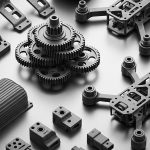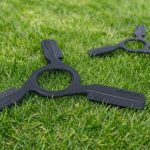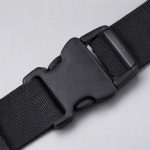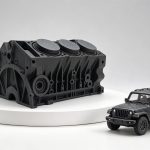
PA6-CF (Carbon Fiber Reinforced Nylon 6) is an engineering filament used to produce functional 3D printed components. Its combination of a nylon 6 matrix and carbon fiber reinforcement makes it a candidate for applications requiring increased stiffness and structural performance.
From manufacturing fixtures to robotic components, PA6-CF can be considered for a range of customized industrial parts. This guide explores some application areas and the components that can be produced through FDM 3D printing.

Manufacturing: Jigs, Fixtures, and Production Tools
Manufacturing lines often require customized tools to position, hold, and inspect workpieces. 3D printing allows these tools to be designed around specific production requirements without relying on conventional tooling for every modification.
Potential PA6-CF applications include:
- Assembly jigs and positioning fixtures
- Inspection gauges and measurement holders
- Workpiece supports and locating blocks
- Custom production-line brackets
These parts are particularly relevant to low-volume production, product development, and customized assembly processes. For fixtures exposed to repeated pressure or mechanical loads, strength and wear should be evaluated under actual operating conditions.
Automotive: Functional Prototypes and Mounting Parts
Automotive development involves customized components for prototyping, testing, assembly, and equipment modification.
Potential applications include:
- Interior mounting brackets
- Sensor and wiring supports
- Custom equipment holders
- Prototype housings
- Assembly fixtures
FDM printing is useful during product development because designs can be modified without manufacturing new molds. However, parts exposed to engine heat, vibration, oils, or chemicals require application-specific validation. PA6-CF should not be assumed suitable for safety-critical automotive components without appropriate qualification.
Robotics: Grippers and End-of-Arm Tooling
Robotic systems often need customized end-of-arm tooling (EOAT) to grip, position, and handle different objects.
PA6-CF can be considered for:
- Robotic gripper bodies
- End-effector mounting brackets
- Sensor holders
- Cable guides
- Automation fixtures
When designing these components, engineers should consider gripping force, component weight, repeated movement, and fastening strength. Fatigue and impact testing are important for parts used in continuous robotic operations.
UAV and Drone Development: Mounting Components
UAV development requires customized structures and mounting systems for cameras, sensors, and electronic equipment.
Potential applications include:
- Camera mounting brackets
- Sensor support structures
- Electronics holders
- Prototype equipment housings
- Ground-testing fixtures
PA6-CF may be evaluated for non-flight-critical components where stiffness and component weight are relevant. Parts used in flight must be validated for vibration, fatigue, impact, environmental exposure, and flight loads. Flight-critical structures require appropriate engineering qualification.
Industrial Equipment: Housings and Replacement Parts
 Industrial machinery often contains protective covers, cable supports, customized enclosures, and small replacement components.
Possible applications include:
- Equipment covers and protective housings
- Cable management brackets
- Sensor enclosures
- Customized mounting plates
- Replacement knobs and holders
For these parts, material selection should account for operating temperature, impact exposure, and chemical contact. Electrical insulation and ESD performance must also be tested separately rather than assumed from the material name.
PA6-CF vs. PETG-CF vs. PLA-CF
Different reinforced filaments serve different application requirements. The selection should be based on the actual material specifications and working environment.
| Material | Typical application considerations |
|---|---|
| PLA-CF | Prototypes and parts where stiffness and ease of printing are priorities |
| PETG-CF | Functional components requiring a balance of stiffness and general-purpose usability |
| PA6-CF | Selected engineering parts where nylon-based properties and increased stiffness are relevant |
Key Considerations When Printing with PA6-CF
Before producing functional parts, several processing factors should be considered:
- Moisture control: Nylon 6 is moisture-sensitive. Dry and store the filament according to its technical data sheet.
- Nozzle selection: Carbon fiber reinforcement is abrasive. Use a suitable wear-resistant nozzle.
- Print orientation: Layer direction, wall thickness, and infill affect the mechanical performance of FDM parts.
- Application testing: Evaluate mechanical loads, temperature, humidity, chemical exposure, and fatigue according to the intended use.
Conclusion
PA6-CF filament can be evaluated for customized industrial components in manufacturing, mechanical engineering, automotive development, robotics, UAV prototyping, and industrial equipment.
Successful application depends on matching the material to the part’s mechanical and environmental requirements. For manufacturers and engineering teams, material consistency, suitable processing conditions, and application testing are essential.
Looking for PA6-CF filament for industrial 3D printing? ⇒ Click It