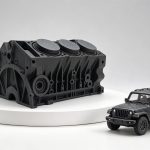
 PA6-CF for Automotive Applications offers manufacturers a lightweight material option for functional components and production tooling.
By combining nylon 6 with carbon fiber reinforcement, PA6-CF delivers increased stiffness and mechanical strength compared with unreinforced nylon. These properties support automotive applications where reducing component weight without sacrificing structural rigidity is important.
However, automotive environments involve elevated temperatures, continuous mechanical loads, vibration, moisture, and chemical exposure. Understanding both the advantages and limitations of PA6-CF helps manufacturers identify suitable applications.
Why Is PA6-CF Suitable for Automotive Applications?
Weight reduction is an important consideration in automotive engineering. Replacing selected metal components with carbon fiber reinforced nylon can reduce part weight while supporting the required mechanical performance.
PA6-CF offers three main advantages:
- High stiffness: Carbon fiber reinforcement improves rigidity and resistance to deformation under mechanical loads.
- Heat resistance: PA6-CF offers better thermal performance than general-purpose materials such as standard PLA.
- Lightweight construction: Its lower density compared with many metals supports lightweight component design.
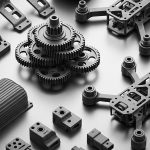
These characteristics make PA6-CF suitable for selected automotive brackets, housings, mounting supports, and manufacturing tools. Actual suitability depends on the material grade and operating conditions.
Which Automotive Components Can Be Made with PA6-CF?
PA6-CF is most relevant to automotive components where stiffness, reduced weight, and customized manufacturing provide practical advantages.
| Automotive Application | Material Advantages | Typical Examples |
|---|---|---|
| Mounting brackets and supports | High stiffness and reduced weight | Sensor mounts, wiring supports, equipment brackets |
| Housings and protective components | Rigidity and dimensional stability | Electronic module housings, mechanical enclosures |
| Manufacturing fixtures and tools | Lightweight construction and design flexibility | Assembly jigs, inspection fixtures, positioning tools |


 Among these applications, manufacturing fixtures and assembly tools offer practical opportunities for 3D printed PA6-CF. Manufacturers can produce customized tooling with complex geometries while reducing the weight of equipment handled by production operators.
For automotive housings and mounting components, the material grade must also meet the required temperature, chemical resistance, and mechanical specifications.
What Challenges Should Manufacturers Consider Before Using PA6-CF?
Despite its advantages, PA6-CF does not replace metal or other engineering plastics in every automotive application.
| Potential Challenge | Effect on Components | What to Consider |
|---|---|---|
| Moisture absorption | Changes dimensions and mechanical behavior | Proper filament drying and storage |
| Continuous mechanical loads | May cause gradual deformation (creep) | Evaluate long-term loading conditions |
| High temperatures | Can reduce stiffness and increase deformation | Check grade-specific thermal properties |
| Vibration and impact | Can affect structural integrity | Conduct application-specific testing |
| Chemical exposure | May affect material performance | Verify compatibility with oils, fuels, and coolants |
Printing conditions also matter. Layer adhesion, printing orientation, and internal geometry influence the mechanical performance of FDM components.
PA6-CF vs Metal: When Does Lightweight Construction Make Sense?
PA6-CF and metal serve different engineering requirements. Metal remains essential for components exposed to extremely high loads, demanding impact conditions, or strict structural and safety requirements.
PA6-CF offers an alternative for selected secondary components and production tools where reducing weight, simplifying geometry, and shortening development cycles are priorities.
For example, a customized assembly fixture does not necessarily require the same load-bearing capacity as a vehicle’s primary structural component. In this situation, PA6-CF can provide sufficient rigidity while making the tool lighter and easier for operators to handle.
Is PA6-CF the Right Choice for Your Automotive Project?
PA6-CF combines carbon fiber reinforcement, mechanical rigidity, and lightweight construction, making it a practical option for selected automotive brackets, electronic housings, and manufacturing fixtures.
Its most relevant applications include mounting brackets, protective housings, and customized production fixtures. However, moisture absorption, temperature exposure, mechanical loads, and chemical compatibility must all be considered before implementation.
For automotive manufacturers, PA6-CF provides another option for lightweight component development. Material testing under representative operating conditions determines whether it can meet the required performance and service life.