3D Printing Pellets are gaining attention as additive manufacturing moves beyond desktop prototyping and enters industrial production. What began as a technology for customized models and small components has expanded into industrial tooling, functional parts, and large-format manufacturing. As production requirements evolve, manufacturers are exploring new material formats that improve material supply, processing efficiency, and production economics.
 For years, 3D printing filament has been the standard choice for FDM (Fused Deposition Modeling) printing. Its consistent diameter, convenient handling, and compatibility with desktop printers make it suitable for everyday applications. However, industrial manufacturing introduces different requirements. Higher material consumption, larger components, and production costs are encouraging manufacturers to explore pellet-based extrusion.
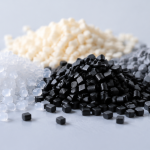
Unlike filament, which requires plastic to be converted into continuous strands before printing, 3D printing pellets enter specialized extrusion systems directly. This approach connects additive manufacturing with established plastic processing technologies and creates new opportunities for industrial applications.
3D Printing Pellets vs. Filament: Two Different Approaches to Material Supply
The main difference between filament and pellets lies in their material delivery and extrusion systems.
Filament is manufactured through an additional extrusion process that transforms plastic compounds into continuous strands, typically 1.75 mm or 2.85 mm in diameter. The finished material is cooled, measured, and wound onto spools before entering an FDM printer.
Pellets follow a more direct route. Thermoplastic granules enter a hopper and move through a heated screw extruder, where they are melted, mixed, and deposited through a nozzle. This process is commonly known as Fused Granular Fabrication (FGF).


| Comparison | 3D Printing Filament | 3D Printing Pellets |
|---|---|---|
| Material form | Continuous strands | Plastic granules |
| Feeding system | Spool and drive gears | Hopper and screw extruder |
| Processing | Filament-based extrusion | Direct pellet extrusion |
| Equipment | FDM/FFF printers | FGF and pellet extrusion printers |
| Material supply | Finished filament | Industrial polymer feedstock |
| Main applications | Desktop printing and detailed parts | Large-format and industrial components |
Both formats build objects layer by layer, but their processing systems serve different manufacturing needs. Filament prioritizes controlled material feeding and accessibility, while pellets support higher-volume extrusion and more direct use of industrial polymer feedstock.
Why 3D Printing Pellets Offer Greater Material and Cost Advantages
One important advantage of pellet-based printing comes from its connection to the established plastics industry.
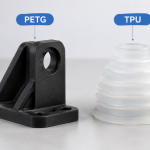
Thermoplastic pellets are widely used in injection molding and extrusion manufacturing. Materials such as PLA, PETG, ABS, PA, and PC are already available through established industrial supply chains. Pellet-based additive manufacturing connects these existing material resources with a new production method.
This also creates opportunities for specialized compounds. Carbon fiber, glass fiber, and other functional additives can be incorporated into suitable polymer formulations to achieve specific mechanical and processing properties.
Cost efficiency is another major consideration. Filament production involves additional manufacturing stages, including melting, strand extrusion, diameter control, cooling, and winding. Pellet printing removes the need to manufacture filament as an intermediate product.
| Manufacturing Factor | Filament | Pellets |
|---|---|---|
| Material conversion | Requires filament production | Direct pellet feeding |
| Feedstock purchasing | Finished filament | Suitable polymer granules |
| Storage | Spools | Bags, containers, or bulk storage |
| Extrusion capacity | Generally suited to lower material flow | Supports higher-volume extrusion |
| Material preparation | Filament quality and moisture control | Pellet drying and processing control |
For manufacturers consuming large quantities of plastic, purchasing suitable pellets creates opportunities to optimize raw material costs. Actual savings depend on polymer grade, equipment investment, processing conditions, and production volume.
Why 3D Printing Pellets Are Gaining Attention in the Future
Pellets address these priorities through established polymer supply channels, flexible material formulations, and compatibility with high-throughput extrusion systems. Their potential extends beyond standard thermoplastics to reinforced compounds and suitable recycled materials.
Filament will continue to serve desktop printing, detailed models, and applications requiring convenient material handling. Pellet-based printing brings a different advantage to the industry: a more direct connection between plastic raw materials and large-scale additive manufacturing.
As 3D printing moves toward broader industrial adoption, the future of material selection will depend on production requirements rather than a single preferred format. Pellets are positioned to become an increasingly important material choice for manufacturers seeking greater flexibility, higher output, and more efficient use of thermoplastic resources.